
CONCEPT
Silent Engagement Defined
- • Passive Observation
- • Potential Contributors
- • Community Impact
Users consume content without actively participating.

What if the silent observers in your digital community could become the most valuable contributors? Understanding silent engagement might just be the key to unlocking their potential.
This visual highlights critical KPIs that community managers track to understand both active and silent engagement, moving users from observers to contributors.
Users consume content without actively participating.
Quantifying interest from observers and active users.
Understanding user journeys to tailor content.
Leveraging data for content visibility and reach.
In today’s bustling digital landscape, the term silent engagement has gained traction among community leaders and social media strategists alike. But what does it mean? Silent engagement refers to the actions of users who consume content without actively participating—think of them as the quiet observers in the back of the room. Understanding this phenomenon is crucial for fostering vibrant online communities.
By recognizing the value of silent engagement, we can identify potential contributors who may just need a nudge to share their insights. This isn't just about increasing numbers; it's about enriching the dialogue and perspectives within our communities. At Likers Network, we believe that every lurker brings something valuable to the table, and understanding their role is the first step in turning passive users into active participants.

Silent engagement encapsulates the behavior of users who prefer to watch rather than act. They might enjoy scrolling through social media posts, reading comments, and absorbing information without leaving a trace of their presence. These individuals play a significant role in shaping the community, often influencing others without ever hitting 'like' or 'comment'. Research into understanding and defining digital communities, such as that found at dl.acm.org, further emphasizes the importance of recognizing these varied forms of participation.
By acknowledging silent engagement, we can create strategies that resonate with these observers, ultimately leading to richer community interactions.
Lurkers, or silent users, contribute significantly to the ecosystem of digital communities. They represent a large segment of our audience, often comprising the majority of our followers or subscribers. Understanding their motivations can help us craft messages that resonate with them and encourage them to share their thoughts. The Northeastern University NULab for Texts, Maps, and Networks, for example, conducts research that sheds light on how different user groups, including lurkers, impact online social structures.
Ignoring this group means missing out on a wealth of potential insights. Lurkers often hold the key to expanding conversations and can lead to newfound discussions that enhance community dynamics.
Digital citizenship encompasses the rights and responsibilities of users in online spaces. Lurkers participate in this dynamic by influencing the tone and direction of conversations without overt involvement. Their presence is a silent endorsement of the content, suggesting that they find value in it. This subtle form of engagement is essential for community growth.
By nurturing an environment that welcomes lurkers, we can transform them into engaged contributors, enriching our community's conversation.
Understanding the psychology behind why lurkers choose to observe rather than participate is key to activating their engagement. Often, it’s a blend of hesitance, uncertainty, or even a lack of confidence that holds them back from stepping into the spotlight.
At Likers Network, we recognize that addressing these barriers can unlock a treasure trove of potential insights and contributions. By fostering a welcoming atmosphere, we encourage lurkers to transition from observers to active community members.
Passive users hold immense value in our communities. Their numbers can provide critical insights into the community's health and engagement levels. Here’s why they matter:
Recognizing the importance of lurkers can help us create pathways for them to engage more actively.
Understanding the journey from lurker to contributor can offer valuable lessons for community managers. Many successful online communities have shared stories of lurkers who transformed into key leaders. For instance, in a well-known community platform, a member who often observed for months eventually began sharing insights that resonated with many and led to a substantial increase in overall engagement. The Reynolds Journalism Institute highlights various community-centered projects where intentional engagement strategies have successfully converted passive consumers into active participants and even leaders.
These transitions often stem from creating an inviting environment that encourages participation without pressure, allowing lurkers to feel comfortable when they finally decide to contribute.
The dynamics among community members can greatly influence whether lurkers decide to engage. When they see others participating and sharing valuable insights, it can motivate them to join the conversation. This highlights
To effectively engage silent users, consider implementing “nudges” in your content strategy. Simple prompts like “We’d love to hear your thoughts!” or “What do you think?” at the end of your posts can encourage lurkers to share their insights without feeling pressured. Creating a welcoming atmosphere can significantly increase their likelihood to contribute.
Silent engagement refers to the behavior of users who consume online content, such as reading posts or comments, without actively participating by 'liking,' 'commenting,' or 'sharing.'
Lurkers are important because they represent a large segment of an audience, validate content relevance, provide diverse perspectives when they choose to engage, and offer significant potential for community growth and dynamic discussions.
Lurkers may be hesitant to participate due to uncertainty, a lack of confidence, or simply preferring to observe. Creating a welcoming and low-pressure environment can help overcome these barriers.
Key performance indicators include post views, click-through rates (CTR), new member sign-ups, retention rates, session duration, and bounce rate. These metrics help gauge interest and potential for active participation.
Google Search Console can provide insights into how users find content through search analytics, ensure content is properly indexed for visibility, and highlight mobile usability, all of which are crucial for attracting and understanding silent users.
To truly understand the impact of our efforts at Likers Network, we need to focus on measuring the success of silent engagement initiatives. This involves defining key performance indicators (KPIs) that reflect how well we’re connecting with our community, particularly those lurking in the background.
By keeping track of important metrics, we can identify what’s working and where adjustments are necessary. This approach not only helps us fine-tune our strategies but also ensures that we're not missing out on the valuable insights our silent users offer.
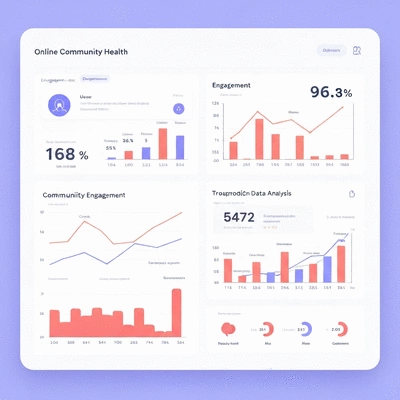
When it comes to measuring engagement, not all metrics are created equal. Community managers should prioritize the following engagement metrics to gain a clearer picture of user interaction:
These metrics help us understand where engagement is lagging. By analyzing them, we can adjust our content strategies and encourage more interaction from lurkers.
As a digital strategist, I know that specific metrics can shed light on our community's pulse. Consider tracking these key engagement indicators:
By honing in on these metrics, we can ensure that our community engagement efforts are aligned with our goals at Likers Network. Each piece of data tells a part of the story, guiding us in our mission to foster a thriving digital community.
One of the best tools at our disposal is Google Search Console. By leveraging this resource, we can gain insights into how our content ranks and how users are finding us. Here’s how:
Utilizing these features not only enhances our visibility but also helps us identify areas for improvement, ensuring that we are effectively engaging our community.
To further enhance our strategies at Likers Network, it’s essential to delve into behavioral insights. Understanding how users interact with our content can inform our future initiatives. Here are some methods to gain these insights:
By understanding user behaviors, we can create tailored experiences that resonate with both lurkers and active participants, ultimately boosting engagement and fostering growth.
As we strive to enhance engagement at Likers Network, it’s crucial to empower our community managers with effective strategies. By focusing on nurturing relationships and adapting to our members' needs, we can create a more inclusive and vibrant online community.
Let’s explore some best practices that can help community managers effectively engage silent users and transform them into active contributors.
Here is a quick recap of the important points discussed in the article:
Convert Followers into Customers

What if your influencer marketing strategy could transform not just your sales, but the very percept
Join Niche Communities to Grow Audience

What if mastering the art of engaging with niche communities could be the key to unlocking your bran
Social Media Trends for Engagement

In today's fast-paced digital world, social media trends evolve at lightning speed. Marketers who ha

Convert Followers into Customers
Join Niche Communities to Grow Audience
Social Media Trends for Engagement
Staying Relevant in Digital Culture
Measuring Social Media Effectiveness